

You Are Not Alone
October 2, 2026
Yesterday, you all received an email from me with links to two very important documents: our new 2026–2030 Strategic Plan and our Equity Statement. I hope you will take some time to read and reflect on both.
Our Strategic Plan provides a clear direction for the BCPVPA over the next four years. We are very proud of what we have achieved under the previous plan and believe that our Association has grown tremendously. Our new plan builds on this work for the future. More than a document, it represents our Association’s collective commitment to supporting, developing, and advocating for Principals and Vice-Principals across British Columbia. It reflects who we are as an Association, what we value, and where we want to go together.
Our Equity Statement is equally important. It speaks to our responsibility as educational leaders to create schools and systems where people experience dignity, belonging, opportunity, and respect. Equity is not separate from the work of leadership; it is embedded in every decision we make, the voices we seek out, the barriers we work to remove, and the cultures we create every day.
These documents belong to all of us and challenge us to think about what we want our Association to be and how we want to lead in every part of the province.
I suspect I am not alone in this but wherever I go, I have a curiosity about the schools and school leadership in that place. In addition to attending the International Confederation of Principals (ICP) convention, I took the opportunity of being in New Zealand to reach out to some local Principals. Walking through schools thousands of kilometres from home has been both fascinating and affirming. I had long conversations and school visits with Iain Taylor of Manurewa Intermediate. Ian is the recipient of their Prime Minister’s Excellence in Education Award for the transformation that he led at his inner-city Auckland school. I also met with Jess Lees at a small rural school in Runanga on a day where she was celebrating a successful term with a Hangi (a feast with the whole school community). I met 2 Maori elders who arrived at the school field at 5 am to dig a pit, light the fires, put the food baskets into the pit, and then cover them again. The last school I visited was a rebuilt elementary school in the suburbs of Christchurch. This school had a population of fewer than 200 students prior to the earthquake which devastated the region, and the school was rebuilt to accommodate 800 students. They are now at 1,200 students and growing. Principal Blair Dravitski has led Lemonwood Grove School through the challenges of growth, earthquakes, and the tragedy of the Christchurch mosque shooting which was only a short distance from the school and affected many of his families.

BCPVPA President Sid Jawanda with Principal Blair Dravitski
from Lemonwood Grove School
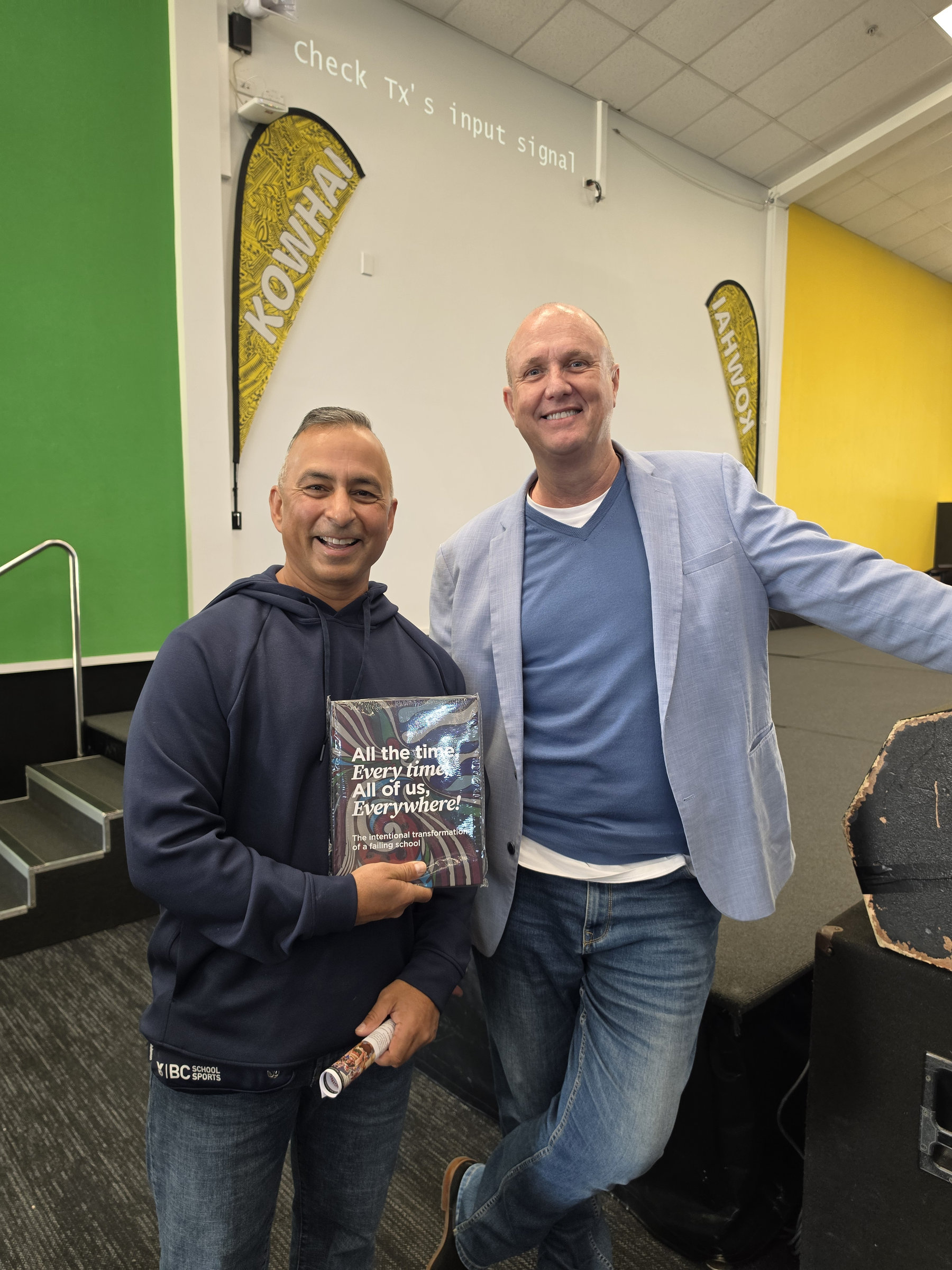
BCPVPA President Sid Jawanda with Principal Iain Taylor
from Manurewa Intermediate
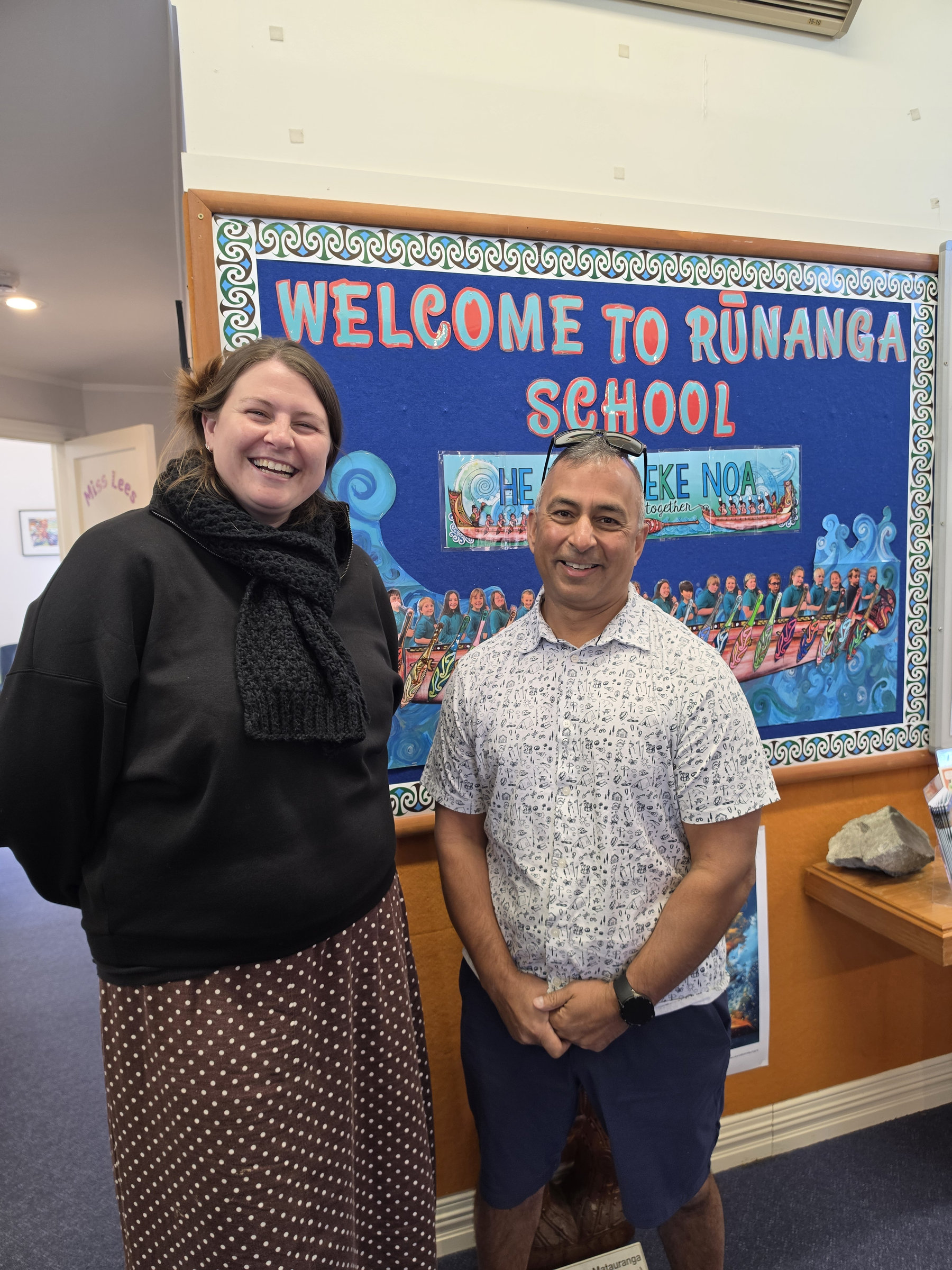
BCPVPA President Sid Jawanda with Principal Jess Lees
There are certainly differences between education in New Zealand and British Columbia. The cultural and historical contexts are different, as are aspects of curriculum, school organization, governance, and the ways communities are reflected within schools.
But what struck me most was not the differences.
It was the similarities.
Walk into a school in New Zealand and you see educators working hard to meet increasingly diverse student needs. You hear conversations about student engagement, inclusion, achievement, attendance, staffing, resources, well-being, and belonging. You see leaders trying to support their staff while simultaneously responding to the needs of students, families, communities, and their education system which is currently bearing the weight of radical shifts in political priorities.
The geography may change. The terminology may change. The structures may change. What I found very familiar, however, was the work of school leadership. School leaders across the globe are facing the same challenges we face here in BC, navigating ever-increasing complexity in their school communities while trying to care for their staff and their own well-being.
When you are in the middle of a difficult day or week, it can feel as though the challenges in front of you are yours alone. They are not.
Across British Columbia, more than 2,700 Principals and Vice-Principals, your colleagues in the BCPVPA, are doing this work alongside you. And beyond our province, educational leaders around the world are wrestling with many of the same questions. You are not alone
That is also why our new Strategic Plan and Equity Statement matter. They remind us that we are part of something larger than our individual schools and districts. As an Association, we can learn from one another in powerful networks, advocate together, challenge our thinking, support one another, and continue building the conditions that allow school leaders to thrive. We know that when you thrive, your whole community benefits. You are part of a network of leaders who all have different contexts but share in the commitment to make a difference in the lives of our students.
Sid Jawanda
President, BCPVPA
Hear more from Sid:
@bcpvpapresident on Instagram