
Honouring Truth Through Action
September 25, 2026
As we approach September 30, the National Day for Truth and Reconciliation, I believe we should all be asking ourselves what our commitment will be for this year and beyond. What actions will you – and your school community – take that will contribute to reconciliation in a meaningful and lasting way?
As a Principal, one of my first commitments for our school was an annual full-school assembly where we could share stories and learning and dream together of building healthy relationships with our Indigenous community. One of our first speakers was Josh Seymour. Josh used the term “ReconciliACTION”, and challenged our students and staff to go beyond words and to plan real concrete actions they would commit to for now and the future.
I am in a very different role this year and I seek to move reconciliation forward by helping Principals and Vice-Principals make positive differences for Indigenous students across the province. I am encouraging each of us to look within – at our leadership, our actions, and our structures – to identify ways in which we can include Indigenous voice and create schools where our Indigenous students see themselves, their culture, and their language.
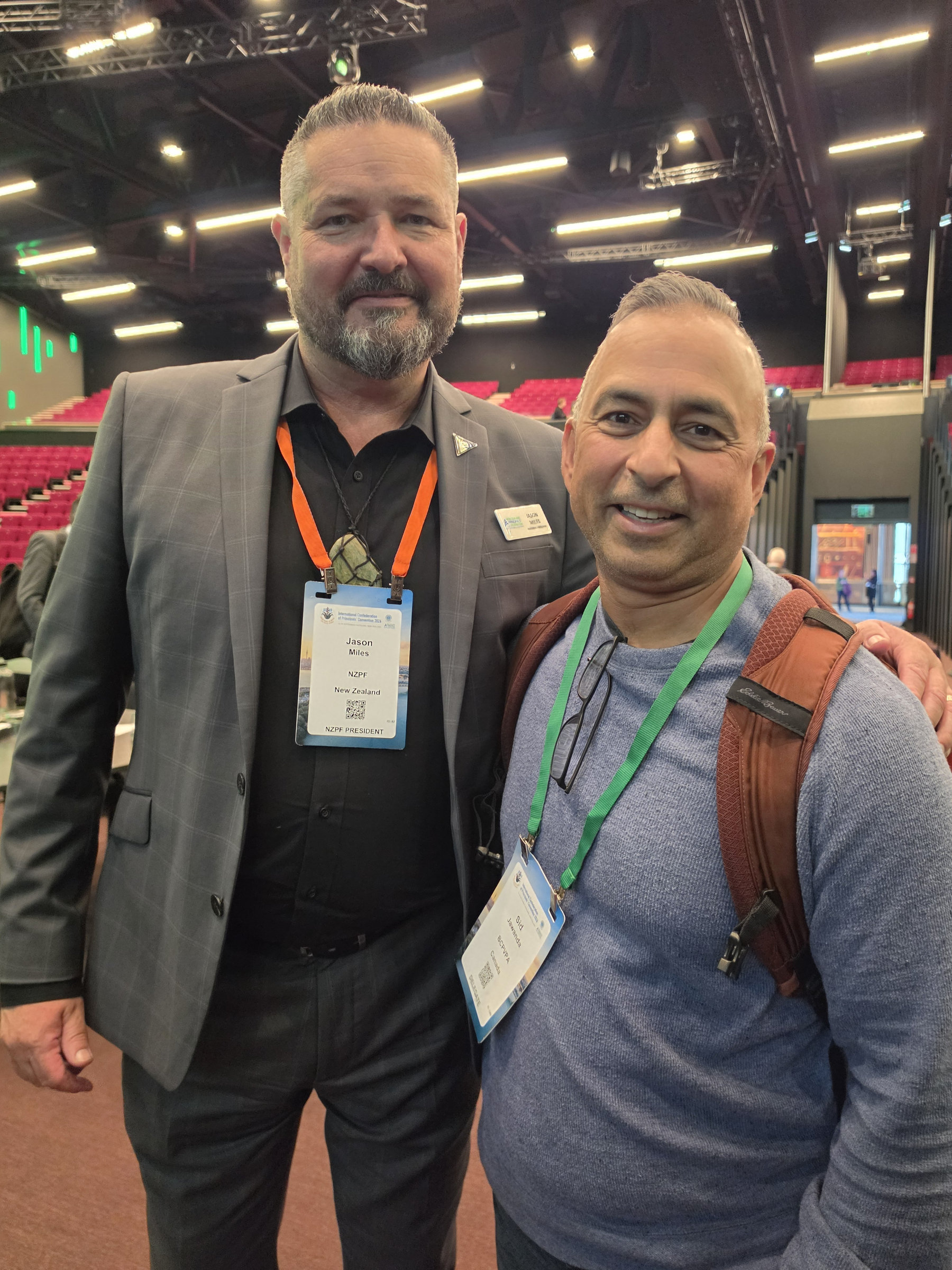
Jason Miles, New Zealand Principals' Federation (NZPF) President,
with BCPVPA President Sid Jawanda
Recently, I had the opportunity to reflect on educational practices in New Zealand, where Indigenous perspectives are embedded throughout many aspects of schooling. What stands out is that Māori culture and language are not treated as occasional additions to the curriculum or featured only during special celebrations. Instead, they are visible and valued in everyday school life. School names, greetings, ceremonies, classroom practices, language instruction, and learning experiences often reflect the cultural identity of the communities they serve.
Students who identify as Māori or Pasifika regularly see themselves represented in authentic ways. Their languages, histories, stories, and cultural traditions are not performative elements placed on the margins; they are recognized as integral to the identity of the school itself. The result is that students experience a deeper sense of connection, belonging, and pride in who they are.
While every context is unique, there is an important lesson for us in British Columbia. Reconciliation and inclusion are at their strongest when they move beyond symbolic gestures and become embedded in the culture, structures, and daily practices of our schools. When students see their identities reflected in meaningful ways, schools become places where everyone can thrive.
As educational leaders, we have both the opportunity and the responsibility to create those conditions. September 30 is an important day of reflection, but our collective commitment must extend beyond a single day. The work continues every day that follows.
Finally, I would like to remind all Chapters that I would really like to visit each of your Chapters over my term. Please reach out and let me know what dates would work best for your Chapter.
Thank you for your leadership. I am proud to represent you in each and every interaction I have on your behalf.
Sid Jawanda
President, BCPVPA
Hear more from Sid:
@bcpvpapresident on Instagram